


Creating a family budget is one of the most effective ways to take control of your household finances, reduce stress, and build a secure future. In today’s economic climate, where inflation and unexpected expenses can strain even the most stable households, learning how to create a family budget is essential for managing money wisely. Whether you’re a single parent juggling childcare costs, a couple saving for a home, or a family planning for college, a well-structured budget helps you allocate resources, avoid debt, and achieve financial goals. This guide breaks down how to create a family budget in 5 simple steps, incorporating proven strategies like the 50/30/20 rule and the 70/20/10 rule money method. We’ll also provide a family budget example and tips on how to start a household budget, making it easy to apply these concepts to your life.
By following these steps, you can transform chaotic spending into a clear plan that prioritizes needs, wants, and savings. According to financial experts at NerdWallet, 60% of Americans don’t have a formal budget, leading to overspending—don’t let that be you. Let’s dive in and explore how to create a family budget that works for your unique situation.

Step 1: Assess Your Current Financial Situation
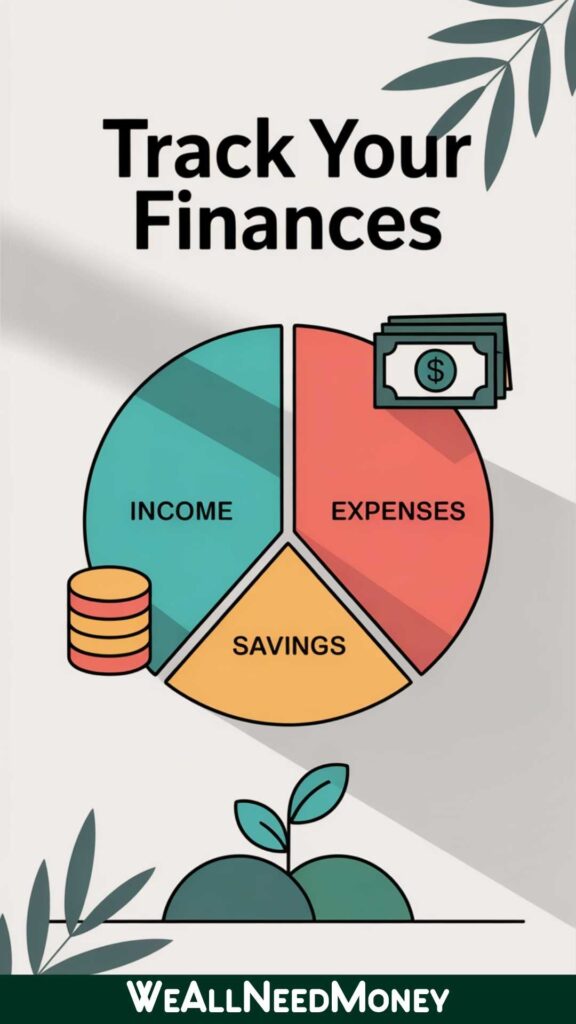
The first step in creating a family budget is to get a complete picture of your income and expenses. Without this foundation, any budget you build will be guesswork, leading to frustration and failure. Start by gathering all your financial statements, including pay stubs, bank statements, credit card bills, and receipts from the past three months. This audit reveals where your money is going and identifies leaks in your spending.
Calculate your total monthly income after taxes—this includes salaries, freelance earnings, child support, or government benefits. For a family budget example, if your household has a combined take-home pay of $5,000, that’s your starting point. Next, list all expenses, categorizing them into fixed (e.g., rent/mortgage, utilities) and variable (e.g., groceries, entertainment). Use free tools like spreadsheets or apps to track this.
One common question is, “How do I start a household budget?” Begin with a simple expense tracker. For instance, if you’re wondering about the 50/30/20 rule—what is the 50/30/20 rule?—it’s a method where 50% goes to needs, 30% to wants, and 20% to savings/debt. Apply this during your assessment to see how your current spending stacks up. Similarly, the 70/20/10 rule money allocates 70% to spending, 20% to savings, and 10% to debt or giving. Use these as benchmarks to spot imbalances, like if 60% of your income is going to needs due to high housing costs.
To make this step efficient, download a free budget template from sites like NerdWallet or Microsoft Office. Track spending for a month using apps like Mint (free plan available), which automatically categorizes transactions and syncs with US banks like Chase or Wells Fargo. This is especially useful for families in the UK or Canada, where similar apps like Money Dashboard or YNAB (You Need A Budget) offer integration with local banks.
Common pitfalls: Many families overlook irregular expenses like annual insurance premiums or holiday gifts. Estimate these by dividing yearly costs by 12 (e.g., $600 car insurance = $50/month). If you’re in a dual-income household, involve your partner to ensure accuracy—my experience shows that collaborative audits prevent surprises.
By the end of this step, you’ll have a transparent snapshot: income vs. expenses. If expenses exceed income, don’t panic; the following steps will help you adjust. This assessment is the cornerstone of creating a family budget that sticks.
Step 2: Set Clear Financial Goals
Once you know your financial baseline, the next step in creating a family budget is setting realistic goals. Goals give your budget purpose, turning it from a list of numbers into a roadmap for your family’s future. Without goals, budgeting feels like a chore; with them, it’s empowering.
Start with short-term goals (3-6 months), like building a $1,000 emergency fund or paying off a $500 credit card debt. Then, add medium-term goals (1-3 years), such as saving for a family vacation or a new car. Long-term goals (5+ years) might include college funds for kids or retirement savings. For a family budget example, a household with $4,000 monthly income might aim to save $400 (10%) for an emergency fund while allocating $2,000 (50%) to needs.
Incorporate budgeting rules here. What is the 50/30/20 rule? It’s a flexible framework: 50% for needs (housing, food), 30% for wants (dining out, hobbies), and 20% for savings/debt. If your goal is debt reduction, adjust to the 70/20/10 rule: 70% for spending, 20% for savings, and 10% for debt. How do I start a household budget with goals? Use SMART criteria: Specific, Measurable, Achievable, Relevant, Time-bound. For instance, “Save $5,000 for family travel by December 2025 by cutting $200/month from dining.”
Involve your family to make shared goals. Discuss with your partner or kids (age-appropriately)—my observations show that involving children in goal-setting teaches responsibility, like saving allowance for toys. Tools like PocketGuard (free basic plan) help set goal trackers, syncing with Canadian banks like RBC or UK ones like Barclays.
Prioritize goals based on urgency: Emergency funds first, then debt, then fun. Track progress monthly to stay motivated. If goals feel overwhelming, start small—remember, the key to creating a family budget is consistency, not perfection.

Step 3: Categorize Your Expenses and Income
Now that goals are set, categorize everything to see how to create a family budget that balances income and outgoings. This step involves dividing expenses into needs, wants, and savings/debt, using rules like the 50/30/20 or 70/20/10 for structure.
List income sources: Salaries, side hustles, benefits. For a family budget example, a $6,000 monthly income household might categorize:
- Needs (50% or 70%): $3,000-$4,200 for essentials like housing ($1,500), groceries ($600), utilities ($300), transportation ($400), insurance ($200), childcare ($400). These are non-negotiables—cut here only if necessary.
- Wants (30% or 20%): $1,800-$1,200 for discretionary spending like dining out ($300), entertainment ($200), subscriptions ($100), clothing ($200), hobbies ($200). This category is flexible; trim it to meet savings goals.
- Savings/Debt (20% or 10%): $1,200-$600 for emergency funds, retirement, or debt repayment. Use high-yield savings like Ally (US) or Marcus (UK) for growth.
What is the 50/30/20 rule? It’s ideal for beginners: 50% needs, 30% wants, 20% savings/debt. For stricter budgets, the 70/20/10 rule prioritizes spending (70%) while still saving (20%) and paying debt (10%). How do I start a household budget categorization? Use apps like Goodbudget (envelope system, free plan) to assign “envelopes” for categories, preventing overspending.
For families, include kid-specific categories like education ($200/month for supplies) or activities ($100). Track variable expenses with receipts or apps—my tip: Review weekly to adjust. If income fluctuates (e.g., freelance), average three months’ earnings.
Create a table for visualization:
| Category | Percentage (50/30/20) | Example Amount ($6,000 Income) | Tips |
|---|---|---|---|
| Needs | 50% | $3,000 | Housing, food, utilities—essentials only. |
| Wants | 30% | $1,800 | Dining, entertainment—flexible cuts. |
| Savings/Debt | 20% | $1,200 | Emergency fund, debt payoff—automate transfers. |
This categorization ensures your family budget is realistic and sustainable.
Step 4: Implement and Track Your Budget
With categories set, implement your budget and track progress—this is where creating a family budget turns into action. Choose a tool: Spreadsheets (free Google Sheets) or apps like YNAB ($99/year, free trial) for detailed tracking. For a family budget example, input your $5,000 income and allocate using the 50/30/20 rule: $2,500 for needs, $1,500 for wants, and $1,000 for savings/debt.
Automate where possible: Set up direct deposits for savings (20%) and bill payments (needs). Use apps like Mint (free) to sync US banks and categorize spending automatically. For the 70/20/10 rule money, allocate 70% to a checking account for spending, 20% to savings, and 10% to debt apps like Acorns (rounds up purchases for investing, $3/month).
Track daily or weekly: Log expenses in your tool and review against goals. Adjust as needed—e.g., if groceries exceed $600, cut $100 from dining. How do I start tracking my household budget? Use reminders or family meetings to discuss progress, involving kids for teachable moments.
Common tools:
- PocketGuard: Tracks “in-pocket” funds after bills (free basic, $7.99/month Plus).
- Goodbudget: Envelope system for shared family budgets (free, $8/month Plus).
Monitor for 30 days, then tweak—my general advice: Celebrate small wins, like saving $100 extra, to keep motivation high.

Step 5: Review, Adjust, and Maintain Your Budget
The final step in creating a family budget is ongoing review—budgets aren’t set in stone. Monthly, compare actual spending to your plan using your tool’s reports. For a family budget example, if your $4,000 income budget shows $2,200 spent on needs (55%), adjust by cutting wants.
What is the 50/30/20 rule? Use it for reviews: If wants exceed 30%, redirect to savings. The 70/20/10 rule of money works similarly—set aside 10% for debt. How do I start maintaining a household budget? Schedule family reviews (e.g., first of the month) to discuss changes, like rising grocery costs.
Adjust for life events: Birth of a child, job loss, or inflation. Revisit goals quarterly—e.g., if your emergency fund reaches $3,000, shift focus to investing. Tools like Airtable (free plan) help visualize adjustments.
To maintain long-term, automate everything: Savings transfers, bill pays. Educate your family—teach kids with apps like Greenlight ($4.99/month). External resource: For more family budgeting ideas, check Money Nuggets, which offers practical tips for women’s finance that apply to households.
Consistency is key—stick to your budget for 3 months to form habits. Over time, you’ll see reduced stress and increased savings, making family life more enjoyable.

Family Budget Example: A Real-World Breakdown
Let’s apply the 5 steps with a family budget example for a $5,500 monthly income household in the US (average for a family of four, per USDA). Using the 50/30/20 rule:
- Income: $5,500 (after taxes).
- Needs (50%, $2,750): Housing ($1,200), Groceries ($600), Utilities ($250), Transportation ($400), Insurance ($200), Childcare ($100).
- Wants (30%, $1,650): Dining Out ($300), Entertainment ($200), Clothing ($150), Subscriptions ($100), Hobbies ($200), Miscellaneous ($700).
- Savings/Debt (20%, $1,100): Emergency Fund ($400), Retirement ($300), Debt Repayment ($200), College Savings ($200).
Total: $5,500. Track with Mint or YNAB. If groceries hit $700, cut $100 from dining. This example shows how to create a family budget that’s flexible and realistic.
Tools to Help You Create a Family Budget
To make budgeting effortless, consider these apps (some links may become affiliate links, earning a commission at no cost to you):
- YNAB (You Need A Budget): Comprehensive for families, with goal tracking. $99/year, free trial.
- Mint: Free, auto-categorizes expenses for US users.
- PocketGuard: Tracks bills and “in-pocket” funds, free basic plan.
- Goodbudget: Envelope system for shared budgets, free plan.
- Acorns: Rounds up purchases for savings/investing, $3/month.
These tools integrate with US/UK/Canadian banks, making it easy to start a household budget.
Frequently Asked Questions
What is the 50/30/20 rule?
The 50/30/20 rule is a budgeting method where 50% of income goes to needs, 30% to wants, and 20% to savings/debt. It’s simple for families to implement when creating a family budget.
What is a family budget example?
A family budget example for $5,500 monthly income: $2,750 needs (housing, food), $1,650 wants (entertainment), $1,100 savings/debt. Adjust based on your situation.
What is the 70/20/10 rule of money?
The 70/20/10 rule allocates 70% to spending, 20% to savings/investments, and 10% to debt or giving. It’s flexible for households starting a budget.
How do I start a household budget?
Start a household budget by assessing income/expenses, setting goals, categorizing spending, implementing with tools like Mint, and reviewing monthly.
What tools help create a family budget?
Tools like YNAB, Mint, and Goodbudget make creating a family budget easy with auto-tracking and goal-setting features.
Disclaimer: Some links may become affiliate links, earning a commission at no cost to you. Earnings vary by individual; this article is for informational purposes, not financial advice—consult a professional for personalized guidance.