


Financial scams are evolving faster than ever, and in 2025, they’re projected to cost consumers billions worldwide. From sophisticated phishing attacks to fake investment schemes, knowing how to avoid financial scams is crucial for safeguarding your hard-earned money. This comprehensive guide explores the best practices to avoid scams, including changing your account passwords regularly, enhancing online security, protecting your personal information, being careful when transferring money, looking out for scams, monitoring your credit, reviewing your accounts, using online transactions with caution, and opting for secure and traceable transactions. We’ll also dive into common financial scams and how you can avoid them, drawing on insights from trusted sources like the FTC and Experian. Whether you’re a parent budgeting for your family or an entrepreneur managing business finances, these tips will help you stay one step ahead of fraudsters.
In an era where digital transactions dominate, avoiding financial scams isn’t just about vigilance—it’s about building habits that protect your financial future. According to the FTC, consumers lost over $10 billion to scams in 2024, with a rise in AI-driven fraud expected in 2025. By implementing the strategies below, you can minimize risks and focus on growing your wealth. Let’s break it down step by step.
Understanding Common Financial Scams in 2025
Before diving into prevention, it’s essential to recognize the threats. Common financial scams in 2025 include a mix of traditional and emerging frauds, often leveraging technology like AI and deepfakes. Here’s a rundown of the most prevalent ones, based on reports from Experian, the FTC, and IRS warnings:
- Phishing Scams: Fraudsters send emails or messages mimicking legitimate organizations (e.g., banks or the IRS) to trick you into revealing sensitive information. In 2025, expect more sophisticated versions using AI to personalize messages. How to spot: Look for urgent language or unexpected attachments.
- Investment and Cryptocurrency Scams: Promises of high returns on crypto or “exclusive” investments, often via social media or unsolicited calls. The IRS’s “Dirty Dozen” for 2025 highlights misuse of tax forms in these schemes. How to spot: Unsolicited offers or pressure to invest quickly.
- Romance Scams: Scammers build online relationships to request money for “emergencies.” The FTC reports billions lost annually, with a rise in deepfake videos in 2025. How to spot: Requests for money or gifts early in the relationship.
- Imposter Scams: Fraudsters pose as government officials, bank representatives, or family members (e.g., grandparent scams). In 2025, AI voice cloning makes these more convincing. How to spot: Threats of arrest or demands for immediate payment.
- Fake Check and Overpayment Scams: You receive a fake check and are asked to return “overpaid” funds. This is common in job or rental scams. How to spot: Checks from unknown sources or overpayments.
- Debt Collection Scams: Scammers claim you owe debt and demand payment via wire transfer or gift cards. How to spot: Threats of legal action without proof.
- Mortgage Closing Fraud: Fake wires during home purchases, diverting funds. How to spot: Last-minute changes to wiring instructions.
- Ransomware and Tech Support Scams: Malware locks your device, or scammers pretend to be tech support to gain access. In 2025, expect more AI-generated support chats. How to spot: Unsolicited pop-ups or calls.
These scams exploit trust and urgency, but knowing them is the first step to avoiding financial scams. For more on emerging threats, visit the FTC’s Scam Alerts or Experian’s Scam Guide.
Change Your Account Passwords Regularly to Avoid Financial Scams
One of the simplest yet most effective ways to avoid financial scams is to change your account passwords frequently. In 2025, with rising data breaches (e.g., the Equifax hack affecting millions), weak passwords are a scammer’s gateway. Use strong, unique passwords combining letters, numbers, and symbols—aim for at least 12 characters. Tools like LastPass or 1Password can generate and store them securely.
How to do it:
- Update passwords every 3-6 months, or immediately after a breach notification.
- Enable two-factor authentication (2FA) on all financial accounts (e.g., banks, PayPal).
- Avoid reusing passwords across sites.
By changing your account passwords, you add a layer of online security that deters hackers. For password management, consider LastPass —it’s user-friendly and helped me protect my family’s online accounts after a close call with a phishing email.
Enhance Online Security to Protect Against Scams
Online security is your first line of defense when learning how to avoid financial scams. In 2025, cyber threats like ransomware are expected to surge, per Experian reports. Start with antivirus software like Norton or Bitdefender to scan for malware. Use a VPN for public Wi-Fi to encrypt your data—ExpressVPN is excellent for this, especially when transferring money or reviewing accounts.
Best practices for online security:
- Install browser extensions like uBlock Origin to block malicious ads.
- Update software regularly to patch vulnerabilities.
- Use secure browsers like Chrome with privacy extensions.
Investing in online security tools not only helps you avoid financial scams but also gives peace of mind. I recommend ExpressVPN for safe online transactions—it’s reliable and easy, even for non-tech-savvy users.
Protect Your Personal Information from Financial Fraud
Protecting your personal information is key to avoiding financial scams, as scammers often use stolen data for identity theft. In 2025, with AI making fake IDs more convincing, vigilance is essential. Never share sensitive details (e.g., SSN, bank info) via email or unsolicited calls.
Tips to protect your personal information:
- Shred documents with sensitive data before discarding.
- Use privacy settings on social media to limit what scammers can see.
- Sign up for identity theft protection services like LifeLock, which monitors for unusual activity.
By safeguarding your personal information, you reduce the risk of scams like debt collection fraud. LifeLock is an excellent tool for this—it alerts you to threats and helps me monitor my credit after a suspicious call.
Be Careful When Transferring Money to Avoid Scams
Being careful when transferring money is vital to avoid financial scams, especially with peer-to-peer apps like Venmo or Zelle. In 2025, overpayment scams are rising, where scammers send fake funds and ask for refunds. Always verify the recipient and use secure methods.
Strategies for safe transfers:
- Use traceable methods like bank wires or PayPal (with buyer protection).
- Double-check account details before sending.
- Avoid wire transfers for unknown parties, as they’re irreversible.
To be careful when transferring money, opt for apps with fraud protection. For secure transactions, PayPal is reliable—it’s what I use for international payments from Uganda to global clients.
Look Out for Scams: Spotting Red Flags in 2025
To look out for scams, train yourself to recognize red flags like urgency, unsolicited contacts, or too-good-to-be-true offers. The FTC reports imposter scams as a top threat in 2025, often via phone or email.
Common red flags:
- We accept requests for gift cards or cryptocurrency payments.
- Pressure to act immediately without verification.
- Emails from “official” sources with spelling errors or odd URLs.
By looking out for scams, you can avoid falling victim. For more, check the FTC’s Scam Guide.

Monitor Your Credit to Detect Financial Scams Early
Monitoring your credit is a proactive way to avoid financial scams, as unusual activity (e.g., new accounts) signals identity theft. In 2025, with mortgage fraud on the rise, regular checks are essential. Use free services like AnnualCreditReport.com for weekly reports.
How to monitor your credit:
- Sign up for alerts from Credit Karma or Experian.
- Review reports for unauthorized inquiries.
- Freeze your credit if suspicious.
Monitoring your credit helps you spot scams like debt collection fraud. Credit Karma is free and user-friendly—it’s how I keep tabs on my finances.
Review Your Accounts Regularly for Suspicious Activity
Reviewing your accounts weekly is a simple habit to avoid financial scams, catch unauthorized charges early. In 2025, with ransomware targeting bank apps, vigilance is key.
Tips for account reviews:
- Log in to bank/credit card apps and check transactions.
- Set up alerts for large or unusual purchases.
- Use secure, traceable transactions for all payments.
Reviewing your accounts prevents scams like fake check fraud. For account management, Mint integrates everything in one place.
Use Online Transactions with Caution to Stay Safe
Using online transactions with caution means verifying sites before buying. In 2025, online shopping scams (e.g., fake stores) are surging, per Experian.
Caution tips:
- Shop on secure sites (HTTPS, padlock icon).
- Use credit cards for purchases (better fraud protection than debit).
- Avoid public Wi-Fi for transactions—use a VPN.
By using online transactions with caution, you avoid scams like phishing. Norton offers secure browsing tools to protect your sessions.
Use Secure and Traceable Transactions for All Payments
Opting for secure and traceable transactions ensures you can recover funds if scammed. In 2025, wire fraud in mortgage closings is common, so avoid irreversible methods like Western Union.
Secure transaction tips:
- Use PayPal or credit cards for traceability.
- Confirm recipient details for bank transfers.
- Track all transactions with apps like Mint.
Using secure and traceable transactions helps avoid financial scams like overpayment fraud. PayPal is my go-to for safe payments.
Best Practices to Avoid Scams: A Comprehensive Checklist
From people also ask queries like “What are the best practices to avoid scams?” and “How can we protect ourselves from financial scams?”, here’s a checklist of proven strategies:
- Educate yourself on scam types via FTC resources.
- Verify communications—call official numbers, not those provided in emails.
- Use multi-factor authentication (MFA) on all accounts.
- Report scams to the FTC or local authorities to help others.
These practices, combined with regular credit monitoring, are your shield.
Ways of Avoiding Financial Scams: Step-by-Step Guide
Addressing “What are ways of avoiding financial scams?”, follow this step-by-step guide:
- Educate and Stay Informed: Read sites like Experian’s Scam Guide for 2025 trends.
- Secure Your Devices: Install an antivirus like Bitdefender and update software.
- Verify Before Acting: Check URLs, emails, and calls.
- Limit Shared Information: Use privacy settings on social media.
- Report and Recover: If scammed, contact your bank and file with the FTC.
Common Financial Scams and How You Can Avoid Them
From “What are common financial scams and how can you avoid them?”, here are the key ones:
- Phishing: Avoid by not clicking suspicious links; use Phishing Quiz by Google.
- Romance Scams: Verify identities; never send money to online partners.
- Investment Scams: Research with SEC’s Investor.gov.
- Imposter Scams: Hang up and call official numbers.
For “How to avoid being scammed online”, use VPNs and secure browsers. For essays on avoiding scams online, focus on education and vigilance.
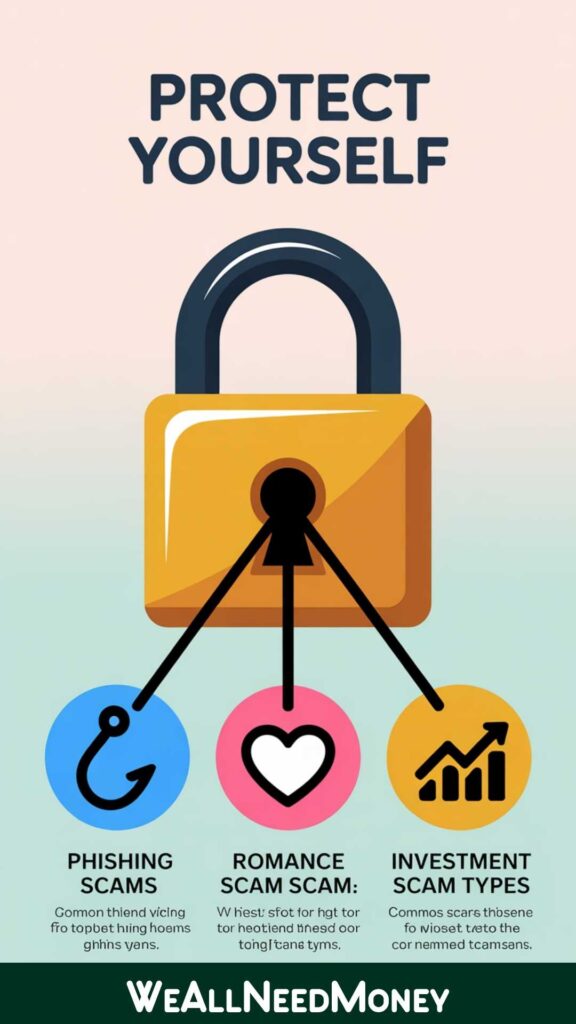
How to Avoid Being Scammed While Shopping Online
Online shopping scams in 2025 involve fake sites or overpayments. To avoid being scammed while shopping online:
- Shop on trusted sites like Amazon.
- Use virtual credit cards for one-time purchases.
- Check reviews on Trustpilot.
How to Prevent Fraud in Business
For entrepreneurs, prevent fraud in business by:
- Verifying vendors with background checks.
- Using secure payment gateways.
- Training employees on phishing.
As a Cape Town IT business owner, I prevented fraud by reviewing accounts weekly.
How to Identify a Scammer on WhatsApp or Online
To identify a scammer on WhatsApp:
- Look for broken English or generic profiles.
- Avoid sharing personal information.
- Report suspicious accounts.
For “How to identify a scammer online”, watch for unsolicited messages or pressure tactics.
Types of Scams: A Quick Overview
Types of scams include phishing, ransomware, romance scams, and investment scams. For a complete list, see FTC’s Scam Types.
Conclusion: Stay Vigilant and Protect Your Finances in 2025
Avoiding financial scams in 2025 requires a combination of habits: change your account passwords, enhance online security, protect your personal information, be careful when transferring money, look out for scams, monitor your credit, review your accounts, use online transactions with caution, and use secure and traceable transactions. By following these tips, you can protect your money from fraud and focus on building wealth. Remember, if it sounds too good to be true, it probably is. Stay informed with resources like NerdWallet and report scams to the FTC.
For more on how to avoid being scammed online or ways of avoiding financial scams, explore our Resources page or join our Newsletter for weekly tips. What scam have you encountered? Share in the comments!
Disclaimer: This article is for informational purposes and not professional financial advice. Consult an advisor. Some links are affiliate links, earning a commission at no cost to you.