


In today’s competitive landscape, budgeting for small business is not just a financial chore—it’s a strategic necessity that can mean the difference between thriving and surviving. As a small business owner, you face constant pressures from rising costs, unpredictable revenue, and the need to reinvest wisely. Effective budgeting for small businesses helps you allocate resources efficiently, identify cost-saving opportunities, and ensure long-term sustainability. This article dives into 5 game-changing budget hacks that can help you save money, streamline operations, and boost profitability. We’ll also cover essential concepts like the 50/30/20 rule for business, the 3 P’s of budgeting, and the 7 steps in the budget process, along with practical small business budgeting templates to get you started.
Whether you’re a startup founder juggling multiple roles or an established entrepreneur looking to optimize finances, mastering budgeting for finances small business is key to scaling without unnecessary debt. According to recent data from the U.S. Small Business Administration, companies with solid budgeting practices are 30% more likely to survive their first five years. By implementing these strategies, you can cut unnecessary expenses, improve cash flow, and focus on growth. Let’s explore how to make budgeting for a small business work for you.

Understanding Budgeting for Small Business
Budgeting for small business involves creating a plan that outlines your expected income and expenses over a specific period, typically monthly, quarterly, or annually. It’s more than tracking numbers—it’s about making informed decisions to save money in your business. A well-structured budget helps you prioritize spending, forecast future needs, and avoid common pitfalls like overspending on non-essentials.
For small businesses, budgeting finances small business is particularly challenging due to fluctuating revenues and limited resources. However, with the right approach, you can turn it into a competitive advantage. Start by assessing your current financial state: calculate your monthly revenue, fixed costs (e.g., rent, salaries), and variable costs (e.g., marketing, supplies). This foundation allows you to apply advanced techniques like the 50/30/20 rule for business or use a small business budgeting template to visualize your plan.
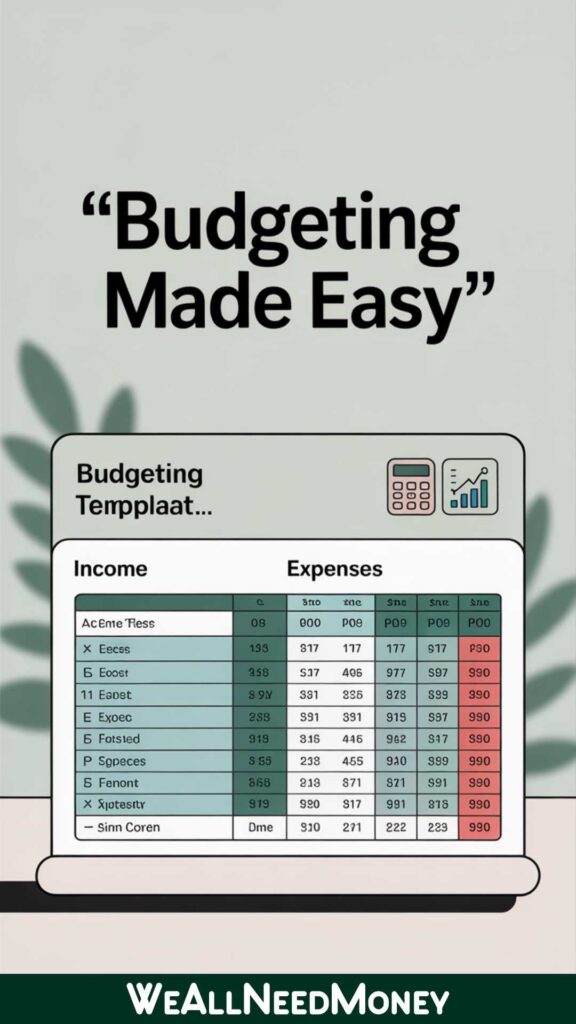
One of the most effective ways to begin is by downloading a free small business budgeting template. These templates, available from sources like NerdWallet, include pre-built spreadsheets with sections for income, expenses, and projections. Customizing a small business budgeting template can save you hours and ensure accuracy in your budgeting for small business efforts.
The 7 Steps in the Budget Process
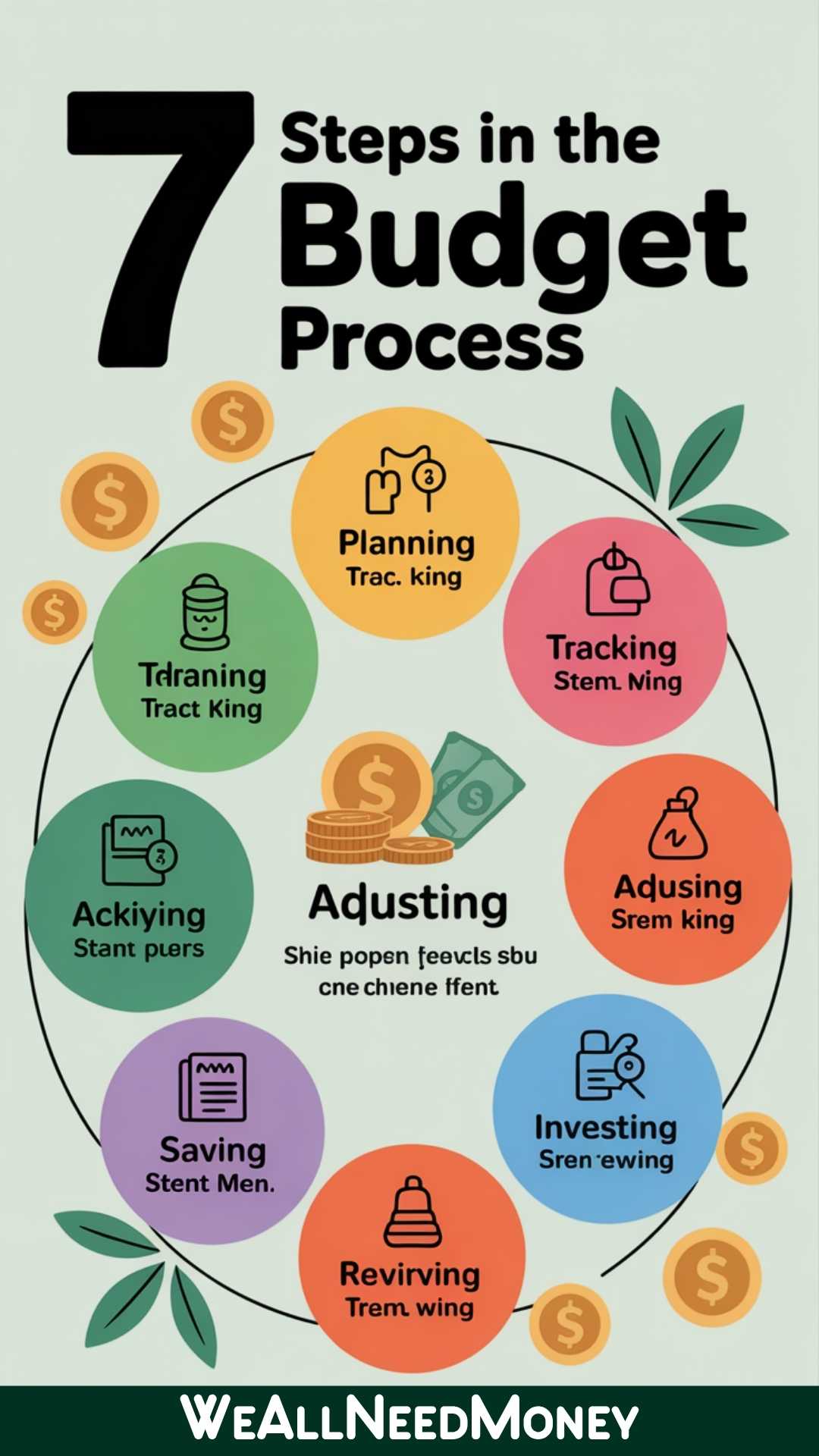
To create a successful budget, follow these 7 steps—a proven framework for small businesses looking to save money and gain control over finances.
1- Gather Financial Data:
Collect all your financial statements, including income reports, expense logs, and bank statements from the past 6-12 months. This step in budgeting for a small business helps you understand your baseline.
2- Estimate Revenue:
Project your income based on historical data and market trends. Be conservative to avoid overestimating—factor in seasonal variations for accurate budgeting finances small businesses.
3- List Expenses:
Categorize costs into fixed (e.g., utilities) and variable (e.g., marketing). Use a small business budgeting template to organize this data visually.
4- Set Goals:
Define what you want to achieve, such as reducing overhead by 20% or saving for expansion. Align goals with the 3 P’s of budgeting (Planning, Prioritizing, Performing).
5- Create the Budget:
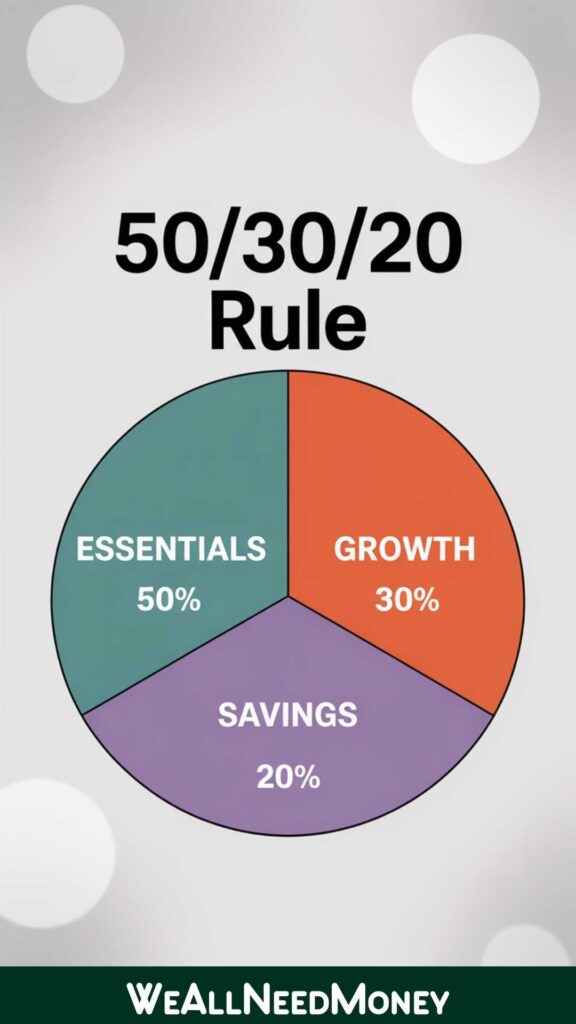
Allocate funds using tools like Excel or specialized software. Apply the 50/30/20 rule for business to divide your budget into essentials (50%), growth (30%), and savings (20%).
6- Monitor and Track:
Regularly review your budget against actuals. Tools like QuickBooks can automate tracking, making budgeting for small businesses more efficient.
7- Adjust and Review:
At the end of each period, analyze variances and make adjustments to your plan. This iterative step ensures ongoing savings and adaptability in budgeting finances for small businesses.
By following these 7 steps in the budget process, you can create a dynamic plan that evolves with your business, helping you save money and stay ahead.
The 3 P’s of Budgeting
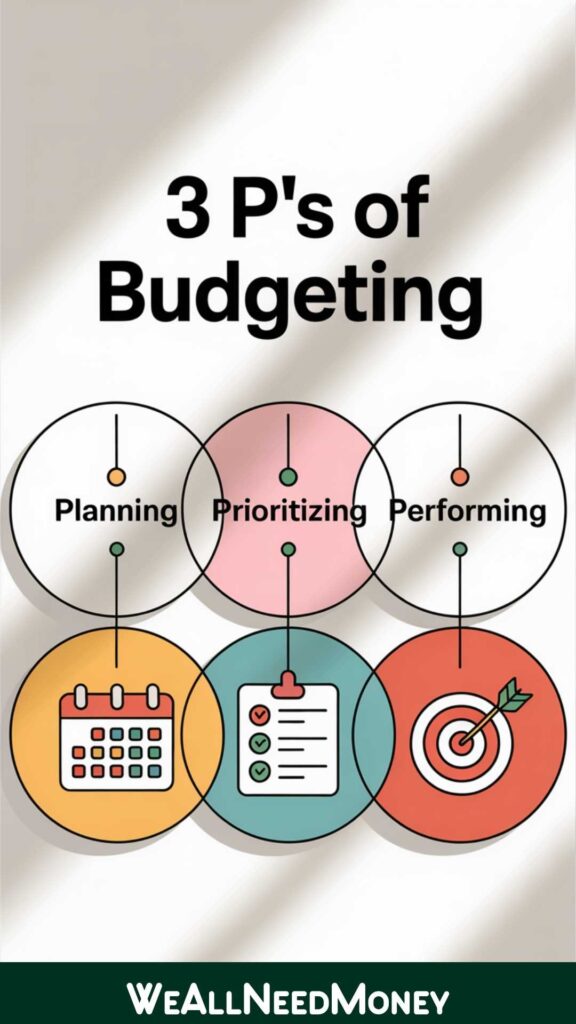
The 3 P’s of budgeting—Planning, Prioritizing, and Performing—provide a simple yet powerful framework for small business owners. This approach ensures your budgeting for small business is proactive and results-oriented.
- Planning: This is the foundation where you forecast income and expenses. Use a small business budgeting template to map out your financial year, anticipating challenges like seasonal dips.
- Prioritizing: Focus on what matters most. Allocate funds to high-impact areas, such as marketing or inventory, while cutting low-value costs. For example, prioritize essential tools over luxury office supplies to save money in your business.
- Performing: Execute your plan and track progress. Regularly review metrics to ensure you’re on target, adjusting as needed. The 3 P’s of budgeting help maintain discipline, turning your budget into a tool for growth.
Incorporating the 3 P’s into your budgeting and financial management for small businesses can lead to significant savings and better decision-making.
The 50/30/20 Rule for Business
The 50/30/20 rule for business is an adaptation of the popular personal finance guideline, tailored to help small business owners allocate resources effectively. Initially popularized by Elizabeth Warren, the rule divides after-tax income into three categories: needs (50%), wants (30%), and savings/debt repayment (20%). For businesses, it translates to:
- 50% on Essentials: Cover fixed costs like rent, salaries, and utilities. This ensures your core operations run smoothly without overspending.
- 30% on Growth: Invest in marketing, inventory, or training to expand your business. As a small business owner, this portion fuels innovation and customer acquisition.
- 20% on Savings/Debt: Set aside for emergency funds, debt reduction, or reinvestment. This buffer protects against unexpected costs, like the $5,000 loss I experienced in my IT business.
The 50/30/20 rule for business is flexible—adjust based on your industry. For example, a retail business might allocate more to inventory growth. Use a small business budgeting template to apply this rule, tracking categories in columns for easy visualization. According to NerdWallet, businesses using structured rules like this see up to 25% better cash flow management.
5 Budget Hacks for Small Business Owners to Save Money
Now, let’s dive into the core of budgeting for small business: 5 hacks to save money and optimize your finances. These strategies are practical, easy to implement, and proven to work for entrepreneurs like you.
Hack 1: Use a Small Business Budgeting Template to Track Everything
One of the simplest yet most effective hacks in budgeting for small businesses is adopting a small business budgeting template. These templates provide a ready-made structure to log income, expenses, and projections, eliminating guesswork.
Start with a free small business budgeting template from NerdWallet or Microsoft Office. Customize it with sections for revenue streams, fixed costs, and variable expenses. For example, a template might include monthly columns for sales forecasts and actuals, helping you spot discrepancies early.
This hack saves money by highlighting overspending—e.g., if marketing costs exceed 10% of revenue, cut back immediately. As a small business owner, using a small business budgeting template can reduce financial surprises by 40%, per SBA data. Integrate it with tools like Google Sheets for cloud access, ensuring your small business budget is always up-to-date.
Pro Tip: Download a customizable small business budgeting template and review it weekly. This routine alone can save hundreds in unnecessary expenses.
Hack 2: Apply the 50/30/20 Rule for Business to Allocate Funds Wisely
Implementing the 50/30/20 rule for business is a game-changer for saving money in your industry. Divide your revenue: 50% to essentials (operations), 30% to growth (marketing, inventory), and 20% to savings/debt.
For a retail small business, essentials might cover rent and salaries, growth could fund new stock, and savings could build a buffer for slow seasons. This rule ensures you don’t overspend on wants, like fancy office upgrades, and focuses on sustainability.
To apply it, use a small business budgeting template to categorize expenses. Track adherence monthly—if essentials creep to 60%, trim costs like unused subscriptions. Businesses utilizing this rule report 20-30% better profitability, according to financial experts.
Pro Tip: Automate transfers to a high-yield savings account for the 20% savings portion, ensuring consistent building of your financial safety net.
Hack 3: Automate with Small Business Budgeting Software
Automation is a key hack in budgeting for small businesses, freeing you from manual tracking and reducing errors. Invest in software like QuickBooks or FreshBooks to handle invoicing, expense tracking, and reports.
QuickBooks, for instance, integrates with US banks like Chase, automating categorizations and generating small business budgeting templates with one click. As an entrepreneur, this saves hours weekly, allowing focus on growth. FreshBooks offers similar features with user-friendly dashboards for budgeting finances for small businesses.
This hack saves money by catching overpayments or duplicate charges early. According to a 2025 Intuit report, automated budgeting cuts administrative costs by 25%. Start with a free trial to test integration with your operations.
Pro Tip: Set up alerts for budget thresholds—e.g., notify if marketing spends exceed 30%—to stay on track with the 50/30/20 rule for business.
Hack 4: Conduct Regular Expense Audits Using the 3 P’s of Budgeting
Leverage the 3 P’s of budgeting (Planning, Prioritizing, Performing) to audit expenses monthly, a hack that uncovers hidden savings in your small business.
Planning involves reviewing last month’s data via a small business budgeting template. Prioritizing means ranking expenses (e.g., essential utilities vs. optional subscriptions). Performing requires action, like negotiating vendor rates or switching to cheaper suppliers.
This process can save 10-15% on costs, per SBA studies. For example, audit marketing spends to ensure they align with growth goals under the 50/30/20 rule for business.
Pro Tip: Use free tools like Google Sheets for audits, or upgrade to software for automated insights, making budgeting for small businesses more efficient.
Hack 5: Follow the 7 Steps in the Budget Process Quarterly
Make budgeting a cyclical process by revisiting the 7 steps in the budget process every quarter. This hack keeps your finances dynamic and responsive to changes.
Gather data, estimate revenue, list expenses, set goals, create the budget, monitor, and adjust. Use a small business budgeting template to document changes, ensuring alignment with the 3 P’s of budgeting and the 50/30/20 rule for business.
Quarterly reviews can reveal trends, like seasonal cost spikes, allowing proactive savings. Businesses that audit quarterly save an average of $5,000 annually, according to financial reports.
Pro Tip: Schedule reviews in your calendar, treating them as non-negotiable meetings to maintain discipline in budgeting finances for small businesses.
How to Get Started with Budgeting for Small Business
To implement these hacks, begin with a free small business budgeting template and apply the 50/30/20 rule for business. Track progress using the 7 steps in the budget process and the 3 P’s of budgeting. For more on personal finance tools that complement business budgeting, check NerdWallet.

Conclusion: Save Money in Your Business Today
Budgeting for small business is your roadmap to financial stability and growth. By using a small business budgeting template, applying the 50/30/20 rule for business, embracing the 3 P’s of budgeting, following the 7 steps in the budget process, and implementing these 5 hacks, you can save money in your business and focus on what matters—scaling and succeeding. Start today with a free trial of QuickBooks or FreshBooks, and watch your cash flow improve.
Remember, consistent budgeting of finances small business leads to long-term savings and peace of mind. What’s your favorite hack? Share in the comments!

Frequently Asked Questions
What is the 50 30 20 budget rule?
The 50/30/20 budget rule allocates 50% of income to needs (essentials), 30% to wants (discretionary), and 20% to savings/debt repayment. It’s a simple way to balance spending and saving.
What are the 7 steps in the budget process?
The 7 steps are: gather financial data, estimate revenue, list expenses, set goals, create the budget, monitor and track, and adjust and review.
What are the 3 P’s of budgeting?
The 3 P’s are Planning (forecasting), Prioritizing (allocating resources), and Performing (executing and tracking the budget).
What is the 50 30 20 rule for business?
Adapted for businesses, it’s 50% on essentials (operations), 30% on growth (marketing/inventory), and 20% on savings/debt to ensure sustainable finances.