


Financial lessons from debt can transform how you handle money, turning a burden into a path to wealth. If you’ve ever wondered how to use debt to grow your wealth or how debt affects you financially, you’re not alone. Paying off debt fast with a low income or becoming debt-free in 6 months is possible with the right strategies. This article explores five key financial lessons from debt, including practical ways to pay off debt quickly, utilizing a debt payoff vision board, and incorporating debt payoff quotes for motivation. Whether you’re tackling paying off debts or learning how to turn your debt into wealth, these insights will help you achieve financial freedom.
Why Financial Lessons from Debt Matter in 2025
Financial lessons from debt are more relevant than ever in 2025, as rising costs and economic uncertainty make debt a common challenge. According to NerdWallet, the average U.S. household carries over $10,000 in credit card debt alone, which can hinder wealth-building. But debt isn’t always negative—good debt can be leveraged to grow wealth, while bad debt drains resources. Understanding how debt affects you financially, from increased stress to reduced savings, is the first step to turning it around.
The quickest way to get out of debt begins with a positive mindset and taking action. People also ask: How to pay off debt with no money? Or how to pay off debt fast with a low income? These questions underscore the need for strategies such as the debt snowball or avalanche method. By learning financial lessons from debt, you can avoid common pitfalls and build a debt-free future. Let’s dive into the five lessons.
How to Pay Off Debt Quickly
– Assess Your Debt:
List all debts, interest rates, and minimum payments. Use a debt payoff tracker like Undebt.it to organize.
– Create a Budget:
Track income and expenses. Cut non-essentials to free $200/month—tools like YNAB help.
– Choose a Repayment Method:
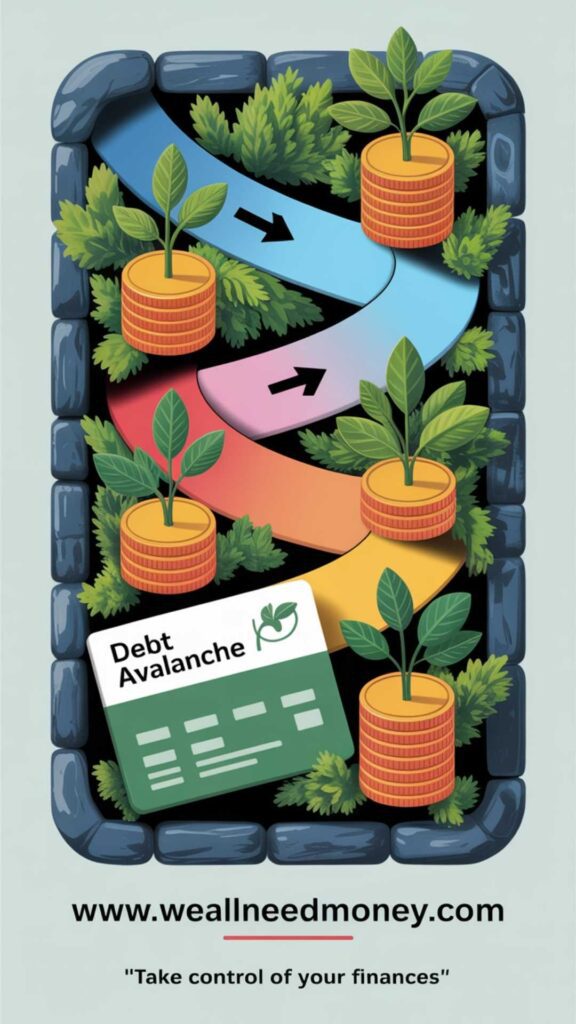
Use the debt avalanche method for high-interest debts or the snowball method for motivation.
– Increase Income:
Consider adding side hustles, such as freelancing on Fiverr, to earn $500/month.
– Negotiate and Seek Help:
Contact creditors to negotiate lower rates or utilize government debt assistance programs.
– Monitor Progress:
Use a vision board for paying off debt and quotes for motivation.
Lesson 1: Prioritize Paying Off Debt Quickly to Free Up Your Cash Flow
One of the most valuable financial lessons from debt is the importance of paying off debt quickly to regain control of your cash flow. When debt lingers, it eats into your income through interest payments, leaving less for savings or investments. For example, paying off debts with high interest rates first (the debt avalanche method) can save you thousands in the long run.
To pay off debt quickly with a low income, start by listing all your debts—from credit cards to loans—and focus on the ones with the highest interest rates. Use a debt payoff tracker to monitor your progress, such as free apps like Undebt.it or printable templates from DebtFreeCharts.com. These tools visualize your journey, making it easier to stay motivated.
People also search for how to pay off $8,000 debt in 6 months. It’s possible by creating a strict budget, cutting non-essential expenses (e.g., dining out), and generating additional income through side ventures like freelancing on Fiverr. According to NerdWallet, the average interest on credit cards is 20%, so paying off $8,000 quickly could save $1,600 in interest alone. A paying off debt vision board—filled with images of a debt-free life, like a family vacation—can keep you focused.
How to Use Debt to Grow Your Wealth Here: Once high-interest debt is cleared, redirect payments to investments. For instance, consolidate low-interest debt (e.g., student loans) and invest the savings in a high-yield account via Ally Bank.
Lesson 2: Use a Paying Off Debt Vision Board to Stay Motivated
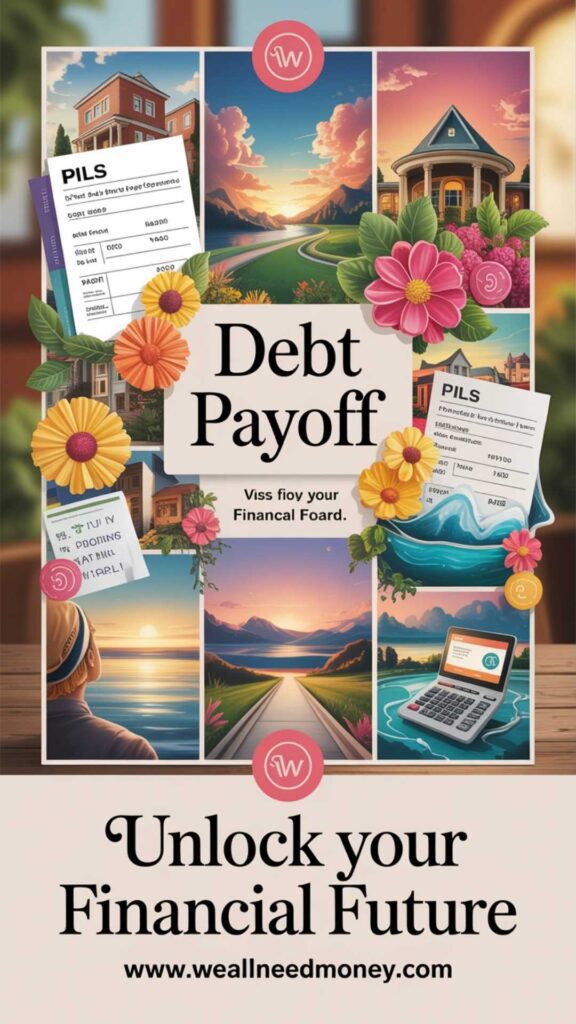
Financial lessons from debt often include the power of visualization. A vision board for paying off debt is a visual tool that represents your debt-free goals, helping you stay motivated during tough times. Search for “paying off debt vision board ideas” on Pinterest, and you’ll find examples like images of paid-off loan statements or dream homes.
To create one, gather pictures of what debt freedom means to you—travel, a new car, or retirement security. Place it where you see it daily, like your fridge or desk. Combine it with paying off debt quotes for inspiration, such as Dave Ramsey’s
“Live like no one else, so later you can live like no one else.”
These quotes remind you that debt affects you financially by limiting choices, but visualization turns that around.
For those asking how to pay off debt with no money, a vision board pairs with free strategies like the no-spend challenge. Track progress on a paying off debt tracker app, such as Debt Payoff Planner, which lets you see milestones visually. People also ask how to be debt-free in 6 months—start with a vision board to maintain discipline.
How to Turn Your Debt into Wealth: View debt payoff as the first step to wealth-building. Once free, invest in assets like stocks through Robinhood, turning former debt payments into wealth-generating assets.
Lesson 3: Leverage Paying Off Debt Quotes for Daily Inspiration
Among the financial lessons from debt is the role of mindset, and paying off debt quotes can provide the daily push you need. Quotes like Mark Cuban’s “Pay off your debt first. Freedom from debt is worth more than any amount you can earn” emphasize why debt affects you financially—it ties up your income and increases stress.
Incorporate quotes into your debt repayment tracker or vision board. For example, Warren Buffett’s “Do not save what is left after spending; instead, spend what is left after saving” encourages aggressive debt repayment. Search for “free financial lessons from debt” to find quote compilations, or use apps like Goodreads for motivation.
For students searching for “financial lessons from debt for students,” quotes like “Debt is the worst poverty” (Thomas Fuller) highlight long-term impacts. To pay off debt fast with a low income, use quotes to stay committed during side hustles or budget cuts.
The Quickest Way to Get Out of Debt: Combine quotes with the debt snowball method—pay off the smallest debts first for quick wins, as recommended by NerdWallet.

Lesson 4: Track Progress with a Paying Off Debt Tracker
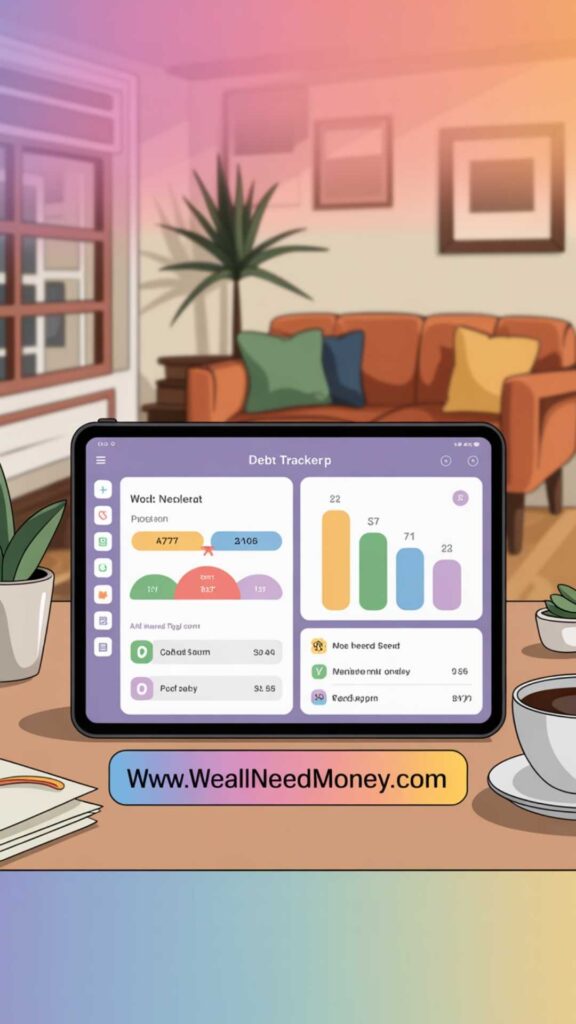
A key financial lesson from debt is the value of tracking, and a paying off debt tracker turns abstract goals into tangible progress. Tools like the Debt Payoff Planner app or free Excel templates from Vertex42.com let you visualize payments, interest saved, and timelines.
For “how to pay off debt fast with low income,” a tracker helps allocate every dollar. Input debts, set payment plans, and watch your total drop. People also search for “financial lessons from debt pdf”—download trackers from sites like DebtFreeCharts.com for printable PDFs.
To pay off $8,000 debt in 6 months, use a tracker with the avalanche method: Focus on high-interest debts. As per NerdWallet, this can save $1,200 in interest. For “how to be debt-free in 6 months,” combine with government debt help schemes like the US’s Income-Driven Repayment plans for student loans.
How Does Debt Affect You Financially? It reduces net worth and increases stress, but a tracker shows how paying off debts builds wealth by freeing cash for investments.
Lesson 5: Turn Debt into Wealth by Learning from It
The ultimate financial lesson from debt is using it to grow wealth. Good debt (e.g., mortgages, student loans) can build assets, while bad debt (e.g., credit cards) drains them. People ask “how to use debt to grow your wealth”—borrow for appreciating assets like real estate or education, as explained by Investopedia.
For “how to turn your debt into wealth,” consolidate high-interest debt with a low-rate loan from SoFi and invest the savings in stocks via Acorns. Debt affects you financially by limiting opportunities, but paying off debts quickly (e.g., extra payments) reverses that.
For “how to pay off debt with no money,” start with free strategies, such as hardship programs from creditors or debt relief services from National Debt Relief. Low-income tips: Cut expenses by 20% and generate additional income through Fiverr. Government schemes, such as the UK’s Breathing Space, provide 60-day relief.
Financial Lessons from Debt for Students: Treat student debt as an investment in future earnings, but pay it off quickly to avoid interest buildup.
How to Pay Off Debt Quickly: A Step-by-Step Guide
To make financial lessons from debt actionable, follow this How-To guide. These steps incorporate fast methods for paying off debt, suitable for individuals with low incomes or limited financial resources.
- Assess Your Debt: List all debts, interest rates, and minimum payments. Use a paying off debt tracker like Undebt.it to organize.
- Create a Budget: Track income and expenses. Cut non-essentials to free $200/month—tools like YNAB help.
- Choose a Repayment Method: Use the debt avalanche method for high-interest debts or the snowball method for motivation.
- Increase Income: Consider adding side hustles, such as freelancing on Fiverr, to earn $500/month.
- Negotiate and Seek Help: Contact creditors to request lower rates or utilize government debt assistance programs.
- Monitor Progress: Use a vision board to track debt repayment and quotes for motivation.
For “how to pay off $8,000 debt in 6 months,” pay $1,333/month using the avalanche and side income, saving $800 in interest (per NerdWallet calculator).
Frequently Asked Questions About Financial Lessons from Debt
Q: How to use debt to grow your wealth?
A: Use good debt for assets like real estate or education, as it appreciates. Bad debt drains wealth, so pay it off first.
Q: What is the quickest way to get out of debt?
A: Use the debt avalanche method, cut expenses, and add income from side hustles. Tools like debt pay-off trackers help.
Q: How does debt affect you financially?
A: It reduces cash flow, increases stress, and lowers net worth. High-interest debt can lead to a cycle of poverty.
Q: How to turn your debt into wealth?
A: Consolidate debt, invest savings in stocks or real estate, and use good debt strategically.
Q: How to pay off debt with no money?
A: Negotiate hardship programs, cut all non-essentials, and seek free debt counseling from the National Foundation for Credit Counseling.
Q: How to pay off debt fast with a low income?
A: Prioritize high-interest debts, use free tools like Google Sheets trackers, and add low-effort hustles like surveys on Swagbucks.
Q: How to be debt-free in 6 months?
A: Create an aggressive budget, use the snowball method, and track with apps like Debt Payoff Planner.
Q: How to pay off $8,000 debt in 6 months?
A: Pay $1,333/month by cutting expenses 30% and earning extra $500/month from freelancing.
Conclusion: Apply These Financial Lessons from Debt Today
Financial lessons from debt show that what seems like a burden can become a foundation for wealth. By paying off debt quickly, utilizing a debt payoff vision board, and incorporating debt payoff quotes, you can achieve debt-free status. Whether paying off debt fast with low income or turning debt into wealth, these strategies work. Search for “financial lessons from debt pdf” for free downloads, or check NerdWallet for more tools. Start today—your future wealth depends on it.