


In 2025, budgeting for college is more crucial than ever as tuition costs continue to rise. Parents across the US are grappling with the challenge of saving for their child’s higher education without compromising family finances. With average in-state public college tuition reaching approximately $12,200 for the 2025-2026 academic year—and total costs, including room and board, averaging $29,500—starting early with a solid college budgeting plan can make all the difference. This comprehensive guide provides essential tips for budgeting for college, including 529 plans, education savings accounts, and financial aid strategies, to help you save for your child’s future without overwhelming debt.
Whether you’re a first-time parent navigating college savings plans or looking to refine your education savings strategies, these insights will equip you with the tools to manage college tuition budgeting effectively. By focusing on smart parental college savings, you can reduce reliance on student loans and ensure your child’s higher education is financially secure.

Understanding the Average Cost of College in 2025
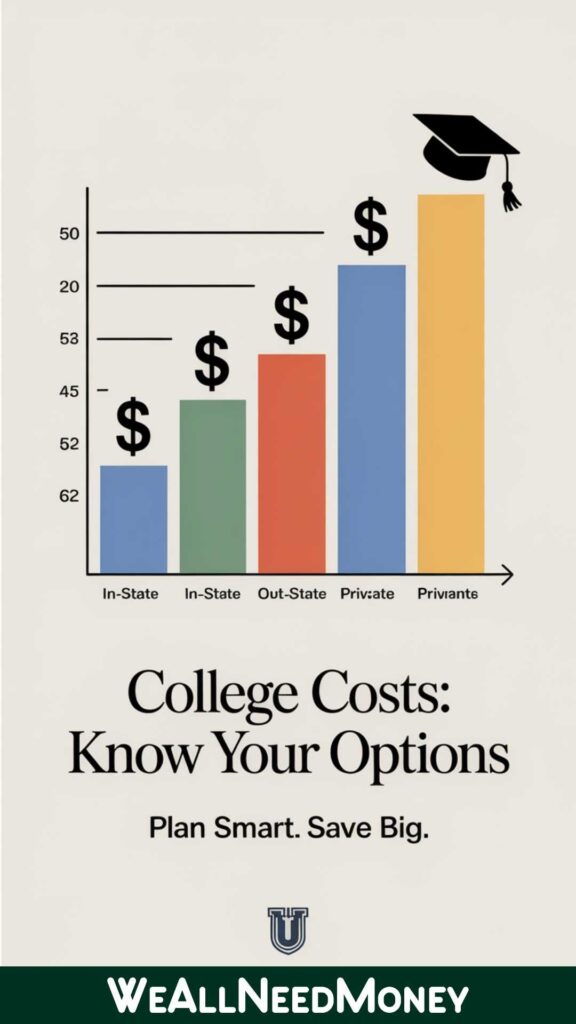
Before diving into budgeting for college tips, it’s essential to grasp the financial landscape. According to U.S. News & World Report and Bankrate data for 2024-2025, with projections for a 5-6% increase in 2025, the average costs are:
- In-state public colleges: Tuition and fees ~$12,200; total with room, board, books, and supplies ~$29,500 per year.
- Out-of-state public colleges: Tuition and fees ~$32,300; total ~$47,000 per year.
- Private colleges: Tuition and fees ~$44,270; total ~$61,800 per year.
These figures underscore the importance of budgeting for college. For a four-year degree, parents could face $118,000 for in-state public schools or $247,200 for private institutions. Factors such as inflation and state funding cuts are expected to drive a 4-6% annual increase, making early college budgeting tips crucial for managing higher education budgets.
To put it in perspective, NerdWallet estimates that saving for college should begin as early as possible, with parents aiming to cover at least 50% of the costs through savings and financial aid, thereby minimizing student loan budgeting burdens.
Why Start Budgeting for College Early?
Budgeting for college isn’t just about covering tuition—it’s about securing your family’s financial future. Starting early leverages compound interest in education savings accounts, reducing the need for loans. For example, saving $200/month from birth in a tax-advantaged 529 plan at 7% annual return could grow to over $100,000 by age 18, according to Vanguard’s college cost projector.
The focus here is simple: Save for your kids’ education to avoid debt traps. Parents who delay budgeting for college often face higher borrowing rates, with student loan interest adding thousands to the total cost of education. By incorporating college budgeting into your monthly finances, you can explore parental college savings options, such as scholarships and grants, making higher education more affordable.
Step-by-Step Guide to Budgeting for College

Budgeting for college involves a structured approach. Follow this step-by-step guide to create a robust plan for saving for college.
Step 1: Assess Your Current Financial Situation
Step 2: Estimate Total College Costs
Use tools like MEFA’s College Cost Projector to forecast expenses based on your child’s age and the type of school they attend—factor in tuition, room and board, books, and miscellaneous costs for accurate higher education budgeting.
Step 3: Set Clear Savings Goals
Determine your target savings amount. For instance, aim to cover 50% of projected costs through education savings strategies. Break it down: Save $300/month for 18 years to reach $100,000 at 5% return.
Step 4: Choose the Right Savings Vehicle
Consider tax-advantaged accounts, such as 529 plans or Education Savings Accounts (ESAs). We’ll dive deeper below, but start by researching state-specific options.
Step 5: Automate Contributions and Monitor Progress
Set up automatic transfers to your college savings account—review annually, adjusting for inflation or changes in income. Track progress with apps like Acorns, which automatically round up purchases to save.
Step 6: Explore Additional Funding Sources
Apply for financial aid for college early through the FAFSA (available starting October 1 for the 2025-2026 academic year). Seek scholarships, grants, and work-study programs to supplement your budgeting for college efforts.
Step 7: Adjust as Needed
Life changes—such as job loss or the addition of children—may require adjustments to your plan. Revisit your college budgeting strategy annually.
This how-to process makes saving for college manageable. For a visual tool, try Wealthfront’s robo-advisor to automate investments aligned with your goals.

Key Savings Options for Budgeting for College
When budgeting for college, selecting the right savings vehicle is key. Here’s a breakdown of popular options.
529 Plans: The Gold Standard for College Savings
529 plans are state-sponsored, tax-advantaged accounts specifically for education expenses. According to Savingforcollege.com and NerdWallet, the top 529 plans for 2025 include:
- my529 (Utah): Low fees, strong investment options; rated best overall by Morningstar.
- Invest529 (Virginia): Flexible, high-rated for performance.
- ScholarShare 529 (California): Tax deductions for residents, diverse funds.
- PA 529 (Pennsylvania): Guaranteed savings option for in-state tuition.
- Bright Start (Illinois): Automatic contributions with rewards.
How 529 Plans Work: Contribute post-tax money, which grows tax-free. Withdrawals for qualified expenses (tuition, books, room/board, K-12 up to $10,000/year, apprenticeships, student loans up to $10,000/lifetime) are federal tax-free. Many states offer tax deductions on contributions (e.g., up to $5,000 in New York).
Contribution Limits: There is no federal annual limit; however, the lifetime limit per beneficiary ranges from $235,000 (Georgia) to $597,000 (California) in 2025. Annual gift tax exclusion: $19,000/individual ($38,000/couple), or 5-year front-loading up to $95,000 ($190,000 couple) without gift tax, per IRS updates.
Tax Advantages: Earnings grow tax-deferred; qualified withdrawals are tax-free federally (and in most states). Some states provide matching grants or tax credits.
Pros: High limits, flexible use, transferable between family members.
Cons: Non-qualified withdrawals incur a 10% penalty plus taxes and involve investment risks.
To set up a 529 plan, visit your state’s website or platforms like Vanguard or Fidelity. For automated budgeting, consider YNAB (You Need a Budget), which integrates with 529 contributions to track your progress.
Education Savings Accounts (ESAs) vs. 529 Plans
Coverdell ESAs are another tax-advantaged option, but with key differences in 2025:
- Contribution Limits: $2,000/year per child (vs. 529’s high limits).
- Income Limits: Contributors must have modified AGI under $110,000/single ($220,000/joint), phasing out above.
- Eligible Expenses: Broader than 529s, including K-12 tuition, tutoring, and computers (up to lifetime limit).
- Tax Advantages: Tax-free growth and withdrawals for qualified expenses; similar to 529s but more flexible for early education.
- Pros: Can be used for K-12; investments in stocks/bonds.
- Cons: Low contribution limit; funds must be used by age 30.
ESA vs. 529: Choose 529 for higher contributions and college focus; ESA for K-12 flexibility. According to Savingforcollege.com, 529s are preferred by most parents due to their higher contribution limits. Quicken offers software to compare ESA and 529 scenarios in your budget.
For investment growth, consider Acorns, which rounds up purchases to invest in education savings—great for hands-off parental college savings.
Tax Advantages and Contribution Limits in 2025
Understanding tax benefits is crucial for effective college budgeting. For 529 plans in 2025:
- Federal Tax-Free Growth: Earnings are tax-deferred; qualified withdrawals are tax-free.
- State Tax Deductions: 34 states offer deductions (e.g., $10,000/couple in Virginia, $5,000/individual in New York).
- Gift Tax Exclusion: $19,000/individual ($38,000/couple) annually; 5-year lump sum $95,000 ($190,000 couple).
- Lifetime Limits: Vary by state (e.g., $500,000 in Virginia, $575,000 in Utah).
According to the IRS and Savingforcollege.com, non-qualified withdrawals incur a 10% penalty plus taxes on the earnings. For ESAs, similar tax-free benefits are available, but with an annual limit of $2,000 and AGI phase-outs.
To maximize your benefits, use Mint to track contributions and tax deductions, ensuring you stay within limits while budgeting for college.
Additional Tips for Budgeting for College
Beyond savings accounts, incorporate these strategies into your budgeting for a college plan:
- Apply for Financial Aid Early: Submit FAFSA by June 30, 2025, for 2025-2026 aid (grants, loans, work-study). From Federal Student Aid, deadlines vary by state (e.g., March 1 in California).
- Seek Scholarships and Grants: Utilize sites like Fastweb or Scholarships.com to find free money. Aim for $5,000-$10,000/year; my tip: Start in high school.
- Consider Part-Time Jobs or Work-Study: Encourage your child to earn $2,000 to $5,000/year, reducing budgeting pressure.
- Use Budgeting Apps: Track progress with YNAB for zero-based budgeting or Mint for free expense tracking. Wealthfront offers automated investing for college funds at low fees.
- Cut Non-Essential Expenses: Redirect $100/month from dining out to college savings plans.
- Explore Roth IRA for Flexibility: Withdraw contributions tax-free for education (though not ideal for all).
- Involve Your Child: Teach financial literacy with apps like Greenlight, fostering responsible student loan budgeting.
For comprehensive tracking, Quicken provides desktop software to model college tuition budgeting scenarios.

Common Mistakes in Budgeting for College and How to Avoid Them
Many parents falter in budgeting for college—here’s how to sidestep pitfalls:
- Starting Too Late: Delay means less compound interest. Solution: Begin saving $200/month from birth.
- Ignoring Inflation: College costs rise 5-6%/year. Solution: Use projectors like MEFA’s to adjust goals.
- Overlooking Tax Advantages: Not utilizing 529 plans means missing out on deductions—solution: Research state benefits on Savingforcollege.com.
- Relying solely on Loans Leads to debt. Solution: Prioritize savings and financial aid for college.
- Forgetting Non-Tuition Costs: Books/room/board add $15,000+. Solution: Include a college plan in your budgeting.
- Not Involving Family: Children Miss Learning. Solution: Discuss goals and use apps like Acorns for shared savings.
By avoiding these, you’ll streamline your parental college savings.
Frequently Asked Questions About Budgeting for College
Here are answers to common questions on budgeting for college:
What is the best way to start budgeting for college?
Begin by estimating costs using tools like Vanguard’s projector and setting up a 529 plan for tax advantages.
How much should parents save for college?
Aim for 50% of projected costs (e.g., $59,000/year for private schools in 2025), contributing $300/month from early childhood.
Are 529 plans worth it for budgeting for college?
Yes, with tax-free growth and state deductions, top plans like my529 (Utah) offer low fees and strong returns.
What’s the difference between ESA and 529 plans?
ESAs have an annual limit of $2,000 and cover K-12, while 529s allow higher contributions ($235,000-$597,000 lifetime) but focus on higher education.
Can I use financial aid for college in addition to my savings?
Yes, FAFSA determines eligibility for grants/loans; submit by June 30, 2025, for 2025-2026 aid.
How do I track my college budgeting progress?
Use apps like Mint for free tracking or YNAB for detailed zero-based budgeting.
Conclusion: Take Action on Budgeting for College Today
Budgeting for college in 2025 doesn’t have to be daunting—with strategies like 529 plans, education savings accounts, and financial aid for college, you can effectively save for your child’s higher education. By starting early, estimating costs accurately, and avoiding common mistakes, you’ll reduce student loan budgeting burdens and secure a brighter future. Remember, the key to successful parental college savings is consistency and smart choices.
For more tools, visit our Resources page. Ready to start? Try YNAB for budgeting, Acorns for automatic savings, or Wealthfront for investing—each can integrate into your budgeting for a college plan. Consult NerdWallet for the latest on 529 plans and college budgeting tips.
Disclaimer: This article is for informational purposes and not professional financial advice. Consult a financial advisor for personalized guidance and advice. Some links may become affiliate links, earning a commission at no cost to you.