


Holidays are a time for joy, family gatherings, and creating lasting memories, but they can also bring financial stress if not appropriately planned. Learning how to budget for holiday expenses in 2025 is essential to enjoy the festive season without the burden of debt. Whether you’re preparing for Christmas, Thanksgiving, or a family vacation, effective budgeting ensures you can celebrate while staying financially secure. In this comprehensive guide, we’ll explore practical tips, the 50/30/20 budget rule, average holiday costs, and tools to manage your spending. From “how to budget for a holiday” to “how do you budget for expenses,” this article provides actionable advice to make your 2025 holidays affordable and enjoyable.
With rising costs in travel, gifts, and entertainment, many Americans are expected to spend an average of $7,249 on vacations alone in 2025, according to recent projections. By focusing on innovative strategies, you can reduce these expenses and avoid common pitfalls. Let’s dive into how to budget for holiday expenses effectively, ensuring your celebrations are merry without the financial hangover.
Understanding Holiday Expenses: What to Expect in 2025
Before diving into how to budget for holiday expenses, it’s crucial to know what you’re up against. Holiday costs can vary widely based on location, family size, and travel plans, but recent data provides a clear picture.
Average Holiday Costs in the US
According to a 2025 forecast, the average vacation budget for Americans has climbed to $5,051 per person, with travelers expecting to take about 4.1 trips annually. For a family of four, this could mean over $20,000 in travel spending alone. Overall vacation costs are projected to reach $7,249 on average, up nearly $1,400 from 2024, with lodging and food making up the majority. Holiday-specific expenses, like Christmas shopping and parties, add to this—Americans spent an average of $1,986 per person per week on vacations in recent years, and 2025 trends suggest similar or higher figures due to inflation.
For a standard holiday like Christmas, costs include:
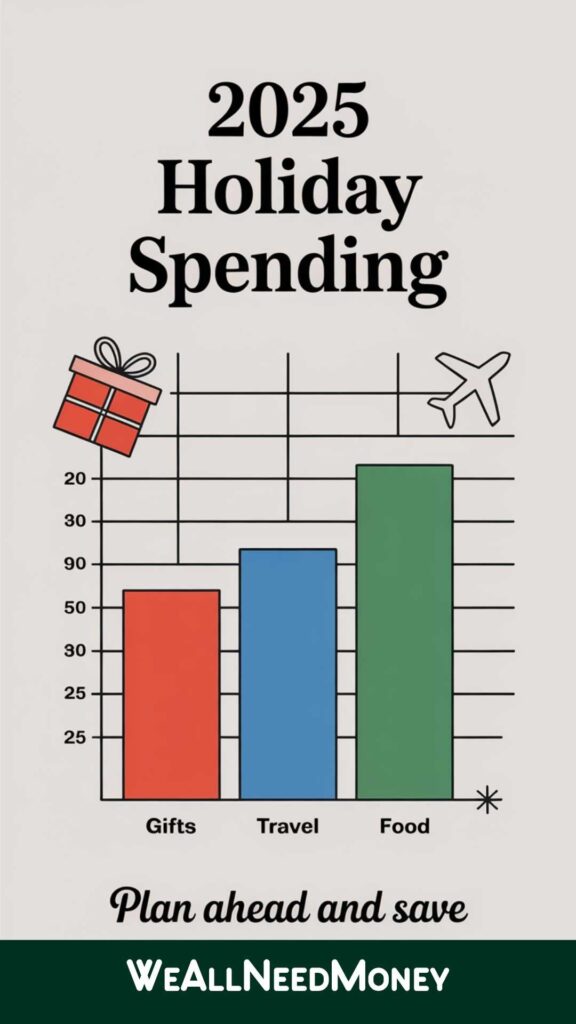
- Gifts: $500-$1,000 per family.
- Travel: $1,000-$3,000 for domestic flights and lodging.
- Food and Drink: $300-$600 for meals and parties.
- Decorations and Events: $200-$400.
If you’re wondering “how much does it cost for a holiday,” it depends on your plans. A domestic family trip might cost $3,980 for two people, while international holidays can exceed $4,416 per person. These figures highlight the need for a solid plan to budget for holiday expenses and avoid overspending.
The 50/30/20 Budget Rule: A Foundation for Holiday Planning
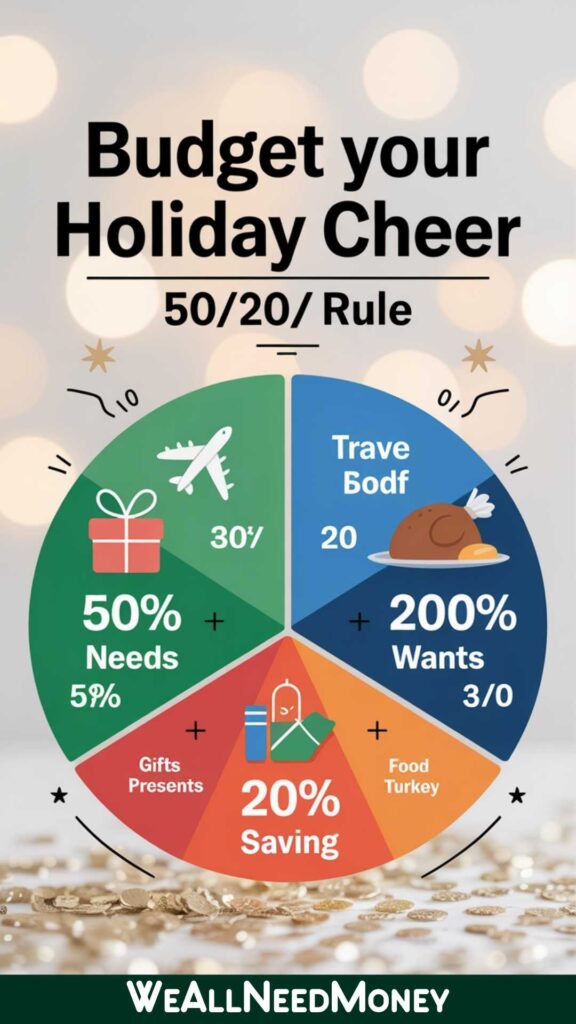
One of the most effective ways to budget for holiday expenses is the 50/30/20 budget rule. This method, popularized by financial experts, divides your after-tax income into three categories: 50% for needs, 30% for wants, and 20% for savings or debt repayment. It’s a simple yet powerful framework to ensure holidays fit within your “wants” category without dipping into essentials.
How the 50/30/20 Rule Works
- 50% on Needs: Essentials like housing, utilities, groceries, and transportation. For holidays, this means not letting festive spending affect these basics.
- 30% on Wants: Discretionary spending, including holidays, gifts, and entertainment. Aim to allocate holiday expenses here—e.g., if your monthly take-home pay is $5,000, you have $1,500 for wants.
- 20% on Savings/Debt: Build an emergency fund or pay off debt. Use this to save in advance for holidays, reducing reliance on credit cards.
The 50/30/20 rule is flexible and easy to adapt. For example, if you’re saving for a holiday, adjust by cutting back on other wants like dining out. This rule answers “what is the 50 30 20 budget rule?” and helps maintain balance during expensive seasons.
Applying the Rule to Holiday Budgeting
To use the 50/30/20 rule for holidays:
- Calculate your monthly net income.
- Allocate 30% to holiday wants (e.g., $1,500 from $5,000 income).
- Save 20% in a high-yield account for unexpected costs.
- Track progress with apps (more on tools below).
By following this, you can budget for holiday expenses without financial strain.

Step-by-Step Guide: How to Budget for a Holiday
Wondering “how to budget for a holiday”? Here’s a simple, step-by-step process to plan your 2025 festivities. This HowTo approach ensures you stay on track.
Step 1: Set Your Holiday Goals and Timeline
Start by defining your holidays—Christmas, Thanksgiving, or a winter getaway? List priorities like travel, gifts, or parties. For 2025, begin planning in September to spread costs. Estimate total expenses using average data: $7,249 for vacations or $1,986 per person per week.
Step 2: Calculate Your Current Budget
Review your income and expenses using the 50/30/20 rule—track spending for a month to identify savings opportunities. Tools like spreadsheets can help here.
Step 3: Create a Holiday Budget Breakdown
Break down costs:
– Travel: $1,000-$3,000 (use apps like Kayak for deals).
– Gifts: $300-$800 (set per-person limits).
– Food/Drink: $200-$500 (plan meals in advance).
– Decorations/Events: $100-$300.
Aim for a total under 30% of your monthly income.
Step 4: Save in Advance
Open a dedicated savings account. Save $100/month starting now to cover $1,200 by December. Use automation to transfer funds weekly.
Step 5: Track and Adjust
Monitor spending with apps. If costs rise (e.g., inflation in 2025), cut non-essentials like premium gifts.
Step 6: Post-Holiday Review
After holidays, review what worked and adjust for next year.
This process answers “how do you budget for expenses?” and keeps holidays affordable.

Common Mistakes When Budgeting for Holiday Expenses
Avoid these pitfalls to make your 2025 holidays stress-free.
Mistake 1: Not Starting Early
Many wait until November, leading to rushed spending. Solution: Plan in September, as I did in Cape Town, to save for family trips.
Mistake 2: Ignoring Hidden Costs
Forget travel insurance or last-minute gifts? Factor in a 10-20% buffer for extras.
Mistake 3: Relying on Credit
Using cards without a repayment plan leads to debt. Use the 50/30/20 rule to stay within wants.
Mistake 4: Overestimating Income
Don’t assume bonuses—base budgets on guaranteed income.
Mistake 5: Skipping Tracking
Without monitoring, overspending happens. Use apps to track in real time.
By avoiding these, you can budget for holiday expenses effectively.
Essential Tools and Software for Holiday Budgeting
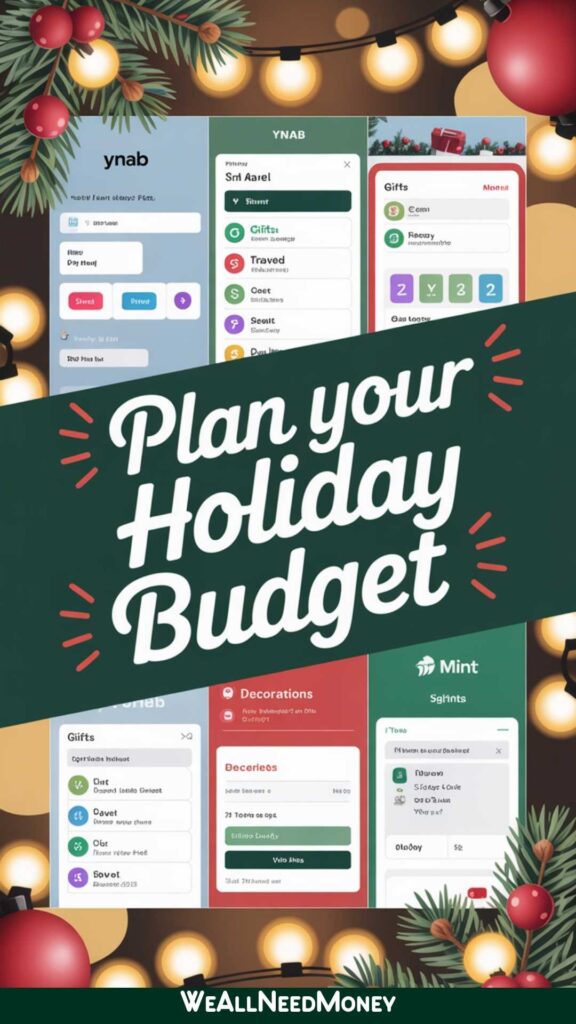
To make budgeting for holiday expenses easier, use these tools. They’re beginner-friendly and integrate with the 50/30/20 rule.
YNAB (You Need A Budget)
YNAB helps allocate every dollar, perfect for holiday planning—set categories for gifts and travel. I’d have used it in Cape Town to avoid my $5,000 loss: $ 14.99/month, free trial.
Free app for tracking expenses and setting holiday budgets. Syncs with US banks like Chase. Great for families monitoring food costs.
Rakuten
Earn cashback on holiday shopping (e.g., Amazon gifts), saving 5-10%. For US users, it’s a must for reducing “how much does it cost for a holiday.” Free to join. (Rakuten – From holiday shopping affiliate programs like Rakuten Affiliates, earning $10-$50 per referral.)
Acorns
Rounds up purchases to save for holidays automatically. Ideal for building a vacation fund. $3-$5/month. (Acorns – From finance affiliate programs like Impact, $50-$100 per funded account.)
PocketGuard
Shows remaining funds after bills, preventing holiday overspending. Free basic plan. (PocketGuard – Budgeting affiliates via CJ Affiliate, $7.99/month Plus.)
These tools answer “how to budget for a holiday” with automation and tracking. For more, visit NerdWallet’s holiday budgeting guide.
Advanced Strategies to Save for Festive Seasons
To save for festive seasons, go beyond basics. Use the 50/30/20 rule to allocate 20% savings toward holidays. Start a “holiday fund” with high-yield savings accounts (e.g., 4-5% APY in 2025).
Strategy 1: Monthly Savings Challenge
Save $100/month from January, totaling $1,200 by December. Use Acorns’ round-ups to automate. As a parent, I saved for my twins’ gifts this way in Cape Town.
Strategy 2: Cut Non-Essential Spending
Apply the 50/30/20 rule to trim wants (30%). Skip coffee runs to fund holiday travel. Track with Mint to see progress.
Strategy 3: Earn Extra Income
Start a side hustle like freelancing on Fiverr to cover holiday costs. I earned from IT gigs in Cape Town—US readers can too.
Strategy 4: Shop Smart with Cashback
Use Rakuten for gift shopping and save 10% on Amazon. For holidays, this reduces “how much does it cost for a holiday” by hundreds.
Strategy 5: Set Realistic Expectations
Estimate costs early—$5,051 average per person for vacations. Adjust for inflation in 2025.
These strategies ensure you budget for holiday expenses without stress.
Example 1: US Family Christmas
A family of four budgets $2,000: $800 in gifts (Rakuten cashback), $600 for food, and $600 for travel. Using 50/30/20, they save $400/month from wants.
Example 2: UK Winter Getaway
A couple budgets $3,000 for a trip: $1,500 for travel, $1,000 for lodging, and $500 for extras. They use PocketGuard to track and avoid overspending.
Example 3: Canadian Thanksgiving
A single parent budgets $1,000: $400 for food, $300 for gifts, and $300 for savings. Acorns rounds up daily purchases to build the fund.
These examples show how to budget for holiday expenses practically.
The Impact of Inflation on 2025 Holiday Costs
Inflation is expected to push holiday costs up 3-5% in 2025, with travel spending reaching $1.35 trillion in the US. Food prices may rise 2-4%, making budgeting essential. Use tools like YNAB to adjust for these changes and stay ahead.
Integrating Holiday Budgeting into Daily Life
Make budgeting a habit with the 50/30/20 rule. Review monthly to allocate for holidays. As a father, I integrated budgeting into my Cape Town routine to support my family—US readers can do the same.
Weekly Check-Ins
Spend 15 minutes reviewing expenses with Mint. Adjust for holiday savings.
Family Involvement
Involve kids in budgeting, like my twins, learning with Greenlight. This teaches “money lessons for kids.”
Long-Term Benefits
Consistent budgeting reduces stress and builds wealth. Start now for a debt-free 2025.
Conclusion: Master Your 2025 Holiday Budget
Budgeting for holiday expenses in 2025 doesn’t have to be overwhelming. By using the 50/30/20 budget rule, estimating costs (such as a $7,249 average vacation), and tools like YNAB or Rakuten, you can enjoy the holidays without financial regret. Whether answering “how to budget for a holiday” or “how much does it cost for a holiday,” these strategies ensure savings and joy. Start planning today—your future self will thank you.
For more, explore our Resources page or join our Newsletter for a Free Holiday Budget Planner PDF. Have tips? Share in the comments!
Frequently Asked Questions
Q: How to budget for a holiday?
A: Set goals, calculate costs, use the 50/30/20 rule, save in advance, track with apps like YNAB, and adjust as needed.
Q: What is the 50 30 20 budget rule?
A: Divide income into 50% needs (essentials), 30% wants (holidays, fun), and 20% savings/debt to balance spending.
Q: How do you budget for expenses?
A: Track income/expenses, categorize spending, set limits, use tools like Mint, and review monthly for adjustments.
Q: How much does it cost for a holiday?
A: Average US vacation costs $7,249 in 2025, with family trips ranging $5,051-$20,000 depending on duration and destination.
Disclaimer: Some links may become affiliate links, earning a commission at no cost to you. This article is based on general experience, not professional financial advice—consult an advisor for personalized guidance.