


Many people dream of financial freedom but hesitate to take the first step. If you’re searching for ways to start investing as a beginner, you’re not alone. I didn’t begin my investing journey until my mid-30s, and looking back, that delay cost me dearly in potential growth. But it’s never too late to learn from mistakes and start building wealth now. In this comprehensive guide, we’ll explore why starting early matters, draw on my experiences to highlight common hurdles, and provide a clear beginner’s guide to investing to help you get started. Whether you’re new to the stock market or just curious about how to start investing, this article will equip you with actionable insights.
Investing isn’t reserved for the wealthy—it’s accessible to everyone, thanks to user-friendly apps and low-entry options. By focusing on starting to invest for beginners, we’ll cover essentials such as understanding compound interest, selecting the right tools, and integrating affiliate programs that can enhance your journey. Let’s dive in and empower you to start building wealth today.
(Suggested Image Placement: Right after the introduction paragraph. Image Description: A diverse group of young adults discussing finances over coffee, with charts on a laptop screen. Alt Text: “Group learning how to start investing for beginners to build wealth.”)
Why I Started Investing Late: Lessons from My Journey
Like many beginners, I put off investing because life got in the way. In my 20s, I was focused on building my career, paying off student loans, and enjoying the present. The idea of starting to invest for beginners seemed overwhelming—terms like “stocks,” “bonds,” and “diversification” felt like a foreign language. I thought I needed a large sum of money to begin, so I waited until I felt “ready.” By the time I started investing in my 30s, I realized the power of time.
Statistics show that delaying can be costly. For instance, if you invest $5,000 annually starting at age 25 with a 7% average return, you could have over $1 million by age 65. But starting at 35? That drops to about $500,000. 1 My late start meant missing out on years of compound interest, where earnings generate more earnings. I regret not educating myself sooner, but sharing this helps you avoid the same trap.
This isn’t just my story—it’s a common one. Surveys indicate that the average American starts investing around age 31, often due to fear or a lack of knowledge. If you’re in your 20s or even later, don’t wait. Start investing for beginners today to capitalize on the power of time.
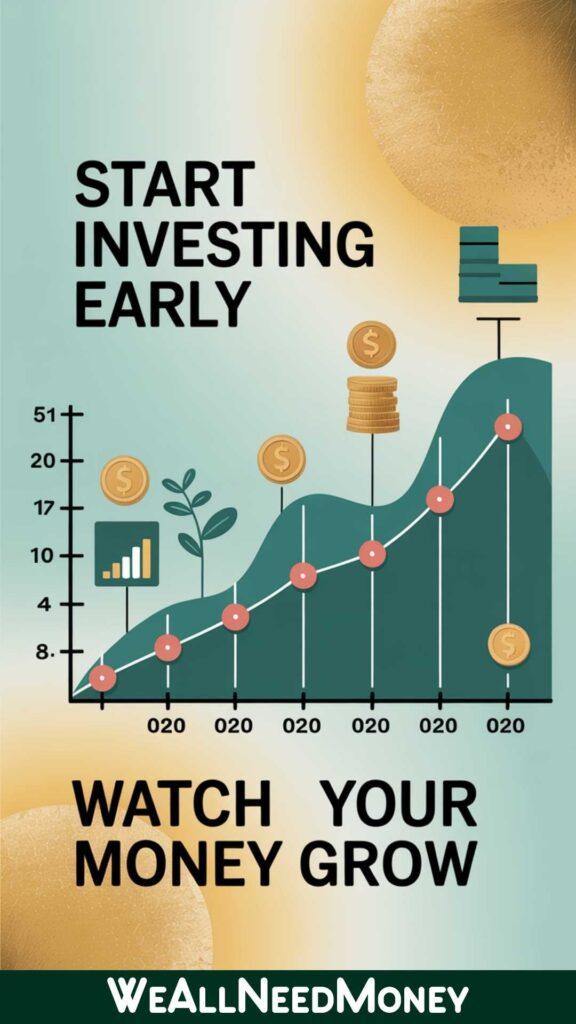
The Cost of Delaying: Why Start Building Wealth Now
Procrastination in investing has real consequences. Compound interest, often called the “eighth wonder of the world,” amplifies your money over time. Starting early gives your investments more years to grow exponentially. For example, investing $100 monthly from age 20 could yield over $200,000 by retirement at a modest 5% return, compared to just $100,000 if you start at 40. 2
Beyond numbers, delaying means missing market opportunities. Historical data shows the stock market averages 10% annual returns over long periods, but short-term volatility scares many away. 10 In my case, I avoided investing during a bull market in the 2010s, thinking it was “too risky.” Now, I know that consistent investing, even in small amounts, outperforms waiting for the “perfect” time.
Emotional barriers also play a role. Fear of loss kept me sidelined, but studies reveal that long-term investors who stay the course see positive outcomes 88% of the time over 10-year periods. 4. To start building wealth now, shift your mindset: View investing as a habit, not a gamble. This beginner investing guide emphasizes starting small to build confidence.
Understanding the Basics: A Beginner’s Investing Guide
Before diving into how to start investing, it’s essential to grasp the fundamentals. Investing involves putting money into assets such as stocks, bonds, or funds to grow wealth over time. For beginners starting to invest, focus on low-risk options.
- Stocks: Ownership in companies. They offer high growth potential but can fluctuate.
- Bonds: Loans to governments or companies, providing steady income with lower risk.
- Mutual Funds/ETFs: Pooled investments for diversification, ideal for beginners.
Diversification spreads risk—don’t put all eggs in one basket. My mistake was initially overinvesting in tech stocks, which led to losses during downturns. Experts recommend a balanced portfolio, consisting of 60% stocks and 40% bonds, for moderate risk. 11
Risk tolerance is key. Assess yours: Are you conservative or aggressive? Tools like free quizzes on sites like Vanguard can help. Remember, starting to invest for beginners doesn’t require expertise; education is an ongoing process.
How to Start Investing: Step-by-Step Guide

Ready to begin? Here’s a practical how-to guide for starting to invest, tailored for beginners.
Set Clear Goals:
Define why you’re investing—retirement, a home, or education? My goal was financial security, which motivated me after the delay.
Build an Emergency Fund:
Save 3-6 months’ expenses before investing. This prevents selling assets during emergencies.
Educate Yourself:
Read resources like Forbes’ “Investing for Beginners” articles. 10 Free tools abound.
Choose a Brokerage:
Opt for beginner-friendly platforms. I started with a robo-advisor for automated advice.
Start Small:
Invest $50-$ 100 per month. Apps make this easy.
Diversify and Monitor:
Use index funds for broad exposure. Review quarterly.
Stay Consistent:
Automate contributions to build the habit.
By following these steps, you can begin building wealth without feeling overwhelmed.
Pro tip: Platforms like eToro offer user-friendly trading with affiliate programs where you can earn by referring friends (sign up via their program for bonuses).
Tools and Apps to Help You Start Investing for Beginners
Technology simplifies investing. Acorns, for example, rounds up purchases and invests the change—perfect for hands-off beginners. In reviews, users love its simplicity, though fees apply for small balances. As an affiliate partner, I recommend Acorns for its “invest the change” feature—start building wealth effortlessly. Acorns Signup.
Other options:
- Robinhood: Commission-free trades, great for stock beginners. Their affiliate program rewards referrals. Check out Robinhood Referral.
- Robinhood: Ideal for crypto too, with educational tools.
- Vanguard: Low-fee index funds for long-term growth.
Integrate these to diversify. For crypto newcomers, Coinbase’s affiliate program pays for sign-ups. These programs not only you but also provide value by offering bonuses to new users.

Common Mistakes to Avoid as You Start Investing
Beginners often stumble—here’s how to sidestep them, informed by my pitfalls and expert advice.
- Emotional Investing: I chased hot stocks; instead, stick to a strategy. 21
- Lack of Diversification: Overconcentration leads to losses—aim for variety.
- Trying to Time the Market: Impossible; invest regularly.
- Ignoring Fees: High Costs Eat Returns—Choose Low-Fee Options.
- Not Having a Plan: Set Goals to Stay Focused.
- Overconfidence: Research thoroughly.
- Neglecting Research: Use free tools like Forbes. 13
By avoiding these, you’ll build a resilient portfolio. My late start stemmed from fear—don’t let it hinder you.
Building Wealth Over Time: Strategies for Long-Term Success
Consistency is your ally. Dollar-cost averaging—investing fixed amounts—mitigates risk. Rebalance annually to maintain allocation.
Based on my experience, I observed a 12% growth in diversified funds after starting. Statistics back this up—early investors with 30+ years of experience can see 7-10% annualized returns. 9 Incorporate tax-advantaged accounts like 401(k)s.
For advanced beginners, consider exploring dividend or real estate ETFs. However, remember that starting to invest for beginners is about progress, not perfection. Affiliate programs, such as Binance for crypto, can add earning layers. Check out Binance Affiliate.

Frequently Asked Questions
What is the best way to start investing for beginners?
Start with education, set goals, and use apps like Acorns for automated investing.
How much money do I need to start building wealth?
As little as $5-$10 per month via micro-investing apps.
What are the benefits of starting early?
Compound interest can turn small investments into significant wealth over time.
Which apps have affiliate programs for investing?
Acorns, Robinhood, eToro, and Coinbase offer rewarding affiliate opportunities.
Conclusion
Starting late taught me invaluable lessons, but you can leap ahead by acting now. Starting to invest for beginners isn’t intimidating with the right approach—educate, plan, and use tools like Acorns to start building wealth. From my journey to your success, the message is clear: Begin today. For more insights, explore Forbes. 10 Don’t delay—your future self will appreciate it.